Giffird's Hope
In Search of Hope
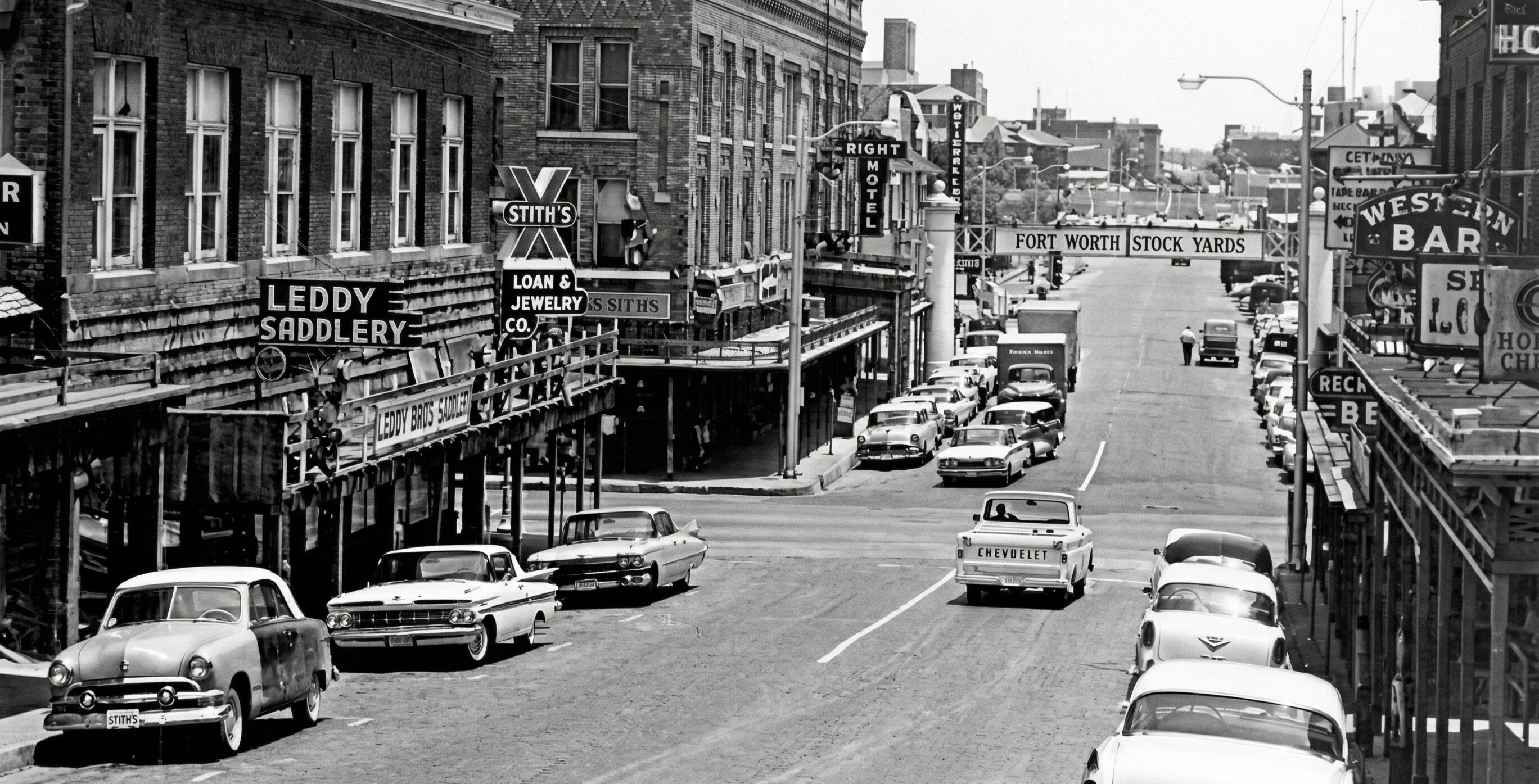
The story begins January 17, 1956, on a cold winter day in Fort Worth, Texas. A freezing rain pelted the city and soon turned into one of the worst snowstorms in the recorded history of Texas. Terrified and saddened, a mother sat in a small apartment atop an old brick building on Main Street in the Fort Worth Stockyards. The apartment was cold and dark inside, since the electricity had been turned off.She was alone with her four-year-old twins—a little boy named Giffird and a little girl, Crystal—along with their one-year-old brother, Justin. She sat the children on pillows on the kitchen floor so they could use the open oven door as a tabletop for their rice and beans. The burners on the gas stove provided a small amount of heat and just enough light to barely see around the kitchen. The mom stuffed towels in the windowsills and under the doors, holding in as much heat as possible, to keep herself and her children warm. They were financially destitute because their father, a Korean War veteran, was suffering from psychological trauma and had wandered off in a severe state of depression and deserted them.The three children and their mother, Maria, were sleeping quietly on the cold kitchen floor when a loud knock suddenly sounded on the apartment door, startling them awake. Excited, Giffird and Crystal immediately thought it was their father coming home. Maria told them to stay in the kitchen, as she wandered through the cold darkness to the front door.
The Spirit of Giving
She was gone only a few moments, when they heard a sudden, loud bang! as the kitchen door blew open from a gust of freezing cold air that filled the little apartment. Giffird and Crystal ran through the darkness to investigate. They found their mother on her knees at the front door, sobbing and looking into a cardboard box.Crystal rushed over to comfort her mother with a gentle little hug. Someone had delivered a box filled with food and four perfectly wrapped little gifts to their tiny front porch. Giffird ran to the window to see who had made such a wonderful delivery; all he could see was a single set of footprints left in the snow leading up to their front porch and the square-shaped impression from the box.He turned to his mother and said, “Mommy, it was an Angel!” She looked up, her eyes were wet with tears, and said, “I know, Sweetie.” That day was special to Giffird, because he discovered the power of “The Spirit of Giving”. And it would have a lasting impact on Giffird for the rest of his life.
The Unknown
When their father returned, life was tough for Giffird. Between his parents’ arguing and the regular psychological and physical abuse, holding his head up was tough. There were nights when Giffird, Crystal, and Justin couldn’t sleep—awakened by their parents’ loud fighting, complete with yelling and throwing things at each other. Things seemed so negative all the time, as if there was no hope for the future.In the morning, Giffird would sneak quietly out of the bedroom to find the apartment trashed, with broken dishes and beer bottles everywhere. Much to his surprise, his parents would be cuddled up together, sleeping on the couch. And he would be relieved they were still alive. The predictable things didn’t faze him; it was always the unknown that was so terrifying.
Hard Work
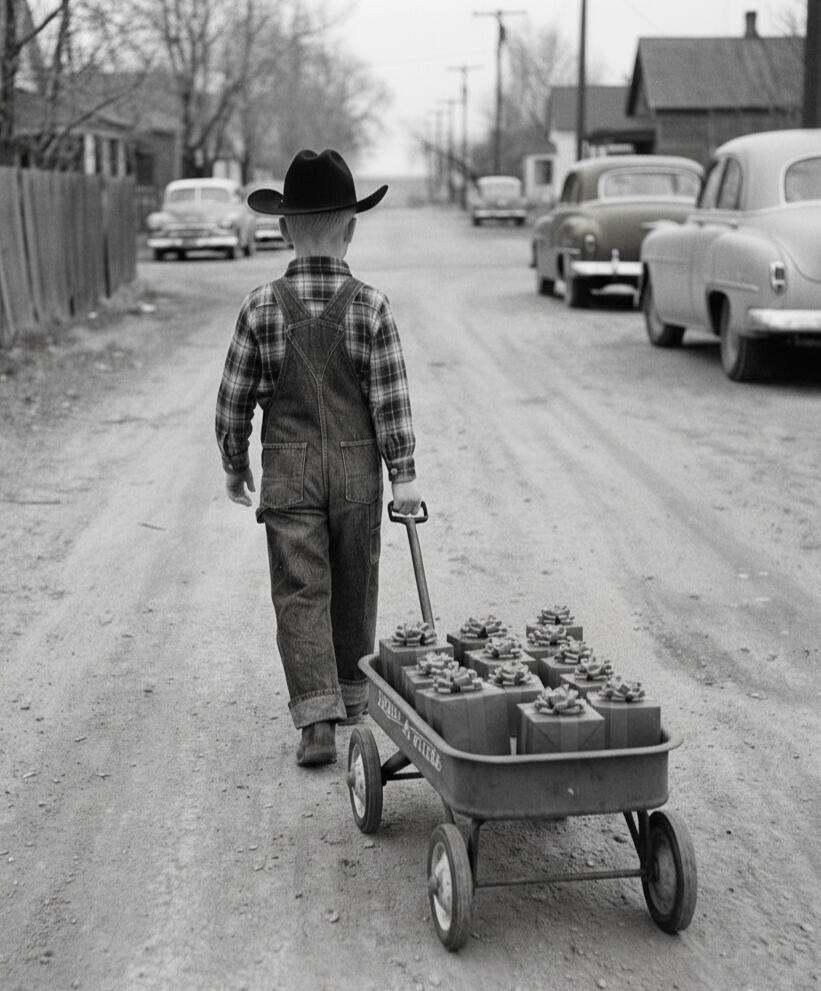
Giffird’s mother and father worked day and night, so he learned the value of hard work at a very young age. At seven years old, he asked the neighbors if he could sweep off their sidewalks or do any kind of small chore to earn a little money. He often pulled his wagon through the streets of the Stockyards, picking up soda bottles and returning them to Riscky’s Grocery Store for two cents apiece.The railroad tracks were the perfect place to hunt for empty bottles, because the railroad workers often tossed their soda bottles from the train alongside the tracks. Giffird would search through the tall weeds, bushes, and grass alongside the tracks to find all the bottles he could, filling his wagon and returning the bottles to Riscky’s for his small cash reward. He would buy a loaf of bread for his mother, and sometimes Mr. Riscky would treat him to a piece of beef jerky or some other little treat to nibble on while pulling his wagon back home.
Another Man's Treasure
When Giffird was nine years old, he became fascinated with an older man named LeRoy, who drove his old pickup truck up and down the streets of the Stockyards. Giffird watched him rummaging through junk piles and trash cans, gathering items thrown out by apartment dwellers and small business owners and putting the stuff into the back of his truck.One day, Giffird built up the courage to walk up to LeRoy and ask him why he collected junk. He approached the older man cautiously. “Mister,” asked Giffird, “Why do you dig in garbage cans and take other people’s trash?” LeRoy smiled at Giffird and told him to sit down on some steps. Then he quickly retrieved two small bottles of Dr. Pepper from a cooler in the back of his truck.While they enjoyed the sodas, Leroy explained to Giffird how different metals could be melted down and re-used. He also told him that some people throw out things because they no longer want them, but a neighbor just a block away might need that very thing desperately. When the older man finished explaining, Giffird was convinced that “one man’s junk was indeed another man’s treasure.”
Treasure Hunting
The next day, Giffird went straight to work on his new venture. He took his wagon and pulled it through the neighborhood, digging in every trash can and dumpster he could find. On his first day of treasure hunting, Giffird found a funny looking piece of equipment. He didn’t know what it was, but it sure looked important. He took it home, cleaned it up, and gave it to his mother.Two weeks later, at the breakfast table with his sister and brother, their mother served up hot, golden waffles made with that funny looking gadget that was once inside someone else’s trash can. It was now a little treasure enjoyed by Giffird’s entire family.
Coffee Mugs and Tea
One day on his way home from school, Giffird passed two large trash cans filled with ceramic coffee mugs. He ran home as fast as he could to grab his wagon to retrieve his new-found treasure before someone else discovered them. He quickly returned home with the mugs, unsure of what to do with them, but he knew he would soon think of something!A week later, Giffird was doing chores for Mrs. Robbins at The Boarding House on Ellis Avenue. When she opened the door of a small storage room, Giffird noticed that it was full of large glass jars filled with tea. When Mrs. Robbins saw the delightful look on Giffird’s face, she asked if he would like to have the tea and the jars as part of his payment for helping her. He replied, enthusiastically, “Yes, ma'am!”Giffird soon came up with the idea of filling the ceramic mugs he found in the trash with the tea that Mrs. Robbins had given to him. Then he put the mugs in his wagon and pulled it through the Stockyards selling them door-to-door. He wanted to become a successful businessman just like LeRoy, the junk collector, and the shop owners in the Stockyards.
Planning for Success
Giffird spent much of his time planning for success by reading and studying everything he could. He was taught from a very early age that “The Holy Bible” was the most important book ever written. Giffird loved to read and he had gathered a large collection of books. Three of his personal favorites were: 1.) Think and Grow Rich by Napoleon Hill; 2.) The Power of Positive Thinking by Norman Vincent Peale; and 3.) How to Win Friends and Influence People by Dale Carnegie.In 1968 Giffird was 16 years old and had officially organized and founded his first small business after being motivated by what he learned from these books.
Stockyard Memories
Giffird’s heart and mind was full of fond memories of his life in the Fort Worth Stockyards. While growing up there, he fed the horses and cleaned out stalls for Mr. Waggoner the Rancher, who gave him his favorite straw hat. Mrs. Robbins from The Boarding House gave Giffird his first genuine leather wallet, and her friend, Mr. Koestler from the Exchange Hotel, gave him his first harmonica.He also washed dishes and took out the trash at the Cattlemen’s Steakhouse for Mr. Roach, the man who gave him his first pocketknife. And Giffird did small chores for Mr. Leddy at the leather store, who gave him a leather belt with a large silver buckle to keep his jeans from slipping down.While visiting the White Front Store, Mr. Fincher took the old, worn-out straw hat from Giffird’s head and replaced it with a big, black felt cowboy hat. Giffird always enjoyed the Western Wear Store, where Mr. Luskey gave him his favorite pair of black cowboy boots on his thirteenth birthday. These individuals had a positive and inspirational influence on Giffird’s life.
Join the Military, Kid
During middle school and throughout high school, Giffird worked three part-time jobs. When he was fifteen years old, he moved into his own little apartment above The Furniture Store on Main Street. In addition to working for the small business owners in the Stockyards, Giffird would take his shoe-shining kit to the Stockyards Hotel, nearby restaurants, and other public places, making several dollars cleaning boots for the cowboys’ and polishing footwear for the local businessmen.One Saturday morning after he’d been living on his own for a couple years, Giffird was sitting on a wooden bench in front of The Furniture Store with his shoe-shining kit. This was a prime spot for business, because it was a favorite place for the local cowboys, employees and shop owners to gather. They would sit around and enjoy a hot cup of coffee or a glass of iced-tea and conversation.On this day, the topic of discussion turned to the subject of Giffird’s future. The cowboys and businessmen gave him fatherly advice, and they all agreed on one point: since his high school days would soon be over, Giffird should join the Armed Forces, get the GI Bill, travel, and get an education. Giffird didn’t want to do that, because he enjoyed visiting and working with all of them so much. But out of respect for them, he thanked them and said he would think it over.
The Billboard
A month later, Giffird was driving down 28th Street in Fort Worth when he saw a large billboard advertising the United States Armed Forces. He stopped at the Recruiting Center and walked inside, where he was greeted by a Marine Corps Sergeant wearing his dress blue uniform. Everywhere he looked, Giffird saw flags.He followed the sergeant into a small meeting room where they talked for a long time. The young man grew excited about becoming a United States Marine, signing all the required forms to join. All he needed now was his mother’s signature (he was only 17 years old), and Giffird soon convinced her to sign the papers.
The Marine Corps
When the day finally came for Giffird to go to Parris Island, South Carolina for boot camp, he was surprised at how many family members and friends from the Stockyards showed up at the Greyhound Bus Terminal to say goodbye.
Basic training was difficult and seemed like it was going to take forever, but Giffird finally graduated and headed to Camp Pendleton for Marine Combat Training. His favorite part of Oceanside, California was working part time in the evenings at the Flying Bridge Motor Inn and Restaurant for Mrs. Satin, the owner and general manager.Eventually, Giffird received orders to report to Camp Courtney in Okinawa, Japan, where he would be stationed with the Third Marine Amphibious Force. From the very moment he and his fellow Marines arrived on the Island of Okinawa, training was tiring and intense. It began every morning at sunrise and lasted until sunset for three long weeks.Finally, they were told they could have the next day off. Giffird crawled into his bunk at 11:00 pm and within minutes fell asleep. At 3:00 am, he was awakened from a deep sleep and ordered to get his men ready to board a ship headed for the South Pacific. Marines throughout Okinawa were scrambling in full battle gear to board the ships waiting for them in Buckner Bay. After traveling for weeks at sea, the unexpected happened.
You're In Hawaii
Giffird woke up in a hospital in severe pain, mentally confused and unable to remember the details of what had happened to him. He noticed that he couldn’t hear anything. A nurse sat down and began to exchange written notes with him.She told him that he had arrived five days earlier in a coma after being medically evacuated from Clark Air Base in the Philippines. Giffird took the pen from the nurse and wrote, “Where am I?” She smiled and handed him a note that read, “Aloha, you’re in Hawaii at the Tripler Army Medical Center. You’re safe here and we’re going to take good care of you. I’m Leilani, your nurse.”Giffird had no memory of the events of the last few weeks and was completely unaware that over half of the Marines in his platoon were killed. While in the hospital, Giffird began to have nightmares and started to remember bits and pieces of his tragic ordeal—but he refused to discuss it with anyone.After being released from the hospital, Giffird was transferred to Marine Barracks Pearl Harbor to begin the processing of his medical discharge from the Marine Corps. He was devastated at the thought of leaving the Marine Corps and had no idea what he was going to do with his life.
Angel Investor
Shortly after Giffird received an Honorable Discharge from the Marine Corps, his nurse Leilani introduced him to Mr. Lee, a very successful Hawaiian entrepreneur. He soon went to work for the businessman, managing one of the busiest restaurants in Hawaii.It wasn’t long before he was helping with other businesses that Mr. Lee owned. One day, Mr. Lee told Giffird that if he ever wanted to start his own business, he would gladly be his “angel investor.” Giffird wasted no time in preparing a presentation to give to Mr. Lee. He wrote a business plan for Royal International, a trading company that would sell gifts, such as personalized mugs filled with coffee, tea, macadamia nuts, and candy, to tourists vacationing in the Hawaiian Islands.Mr. Lee reviewed Giffird’s plan, and the following day brought the young entrepreneur the money needed to finance his venture. Much to Giffird’s surprise, Mr. Lee gave him twice the amount of money that his plan called for. When he suggested that Mr. Lee had made a mistake, the older and more experienced businessman smiled and said, “You always need twice what you think you do.” As it turned out, Mr. Lee’s wisdom proved correct.
Duty-Free Shopping
Giffird opened his first retail location in Hawaii’s International Market Place, where soon he met Mr. O’Regan, a businessman from Ireland who had opened the first “duty-free shop” in the world. A couple of weeks later, he met Mr. Feeney, the businessman who opened the first Duty-Free Shop in the United States located in the Honolulu International Airport.Through these connections, Giffird aggressively sold crystal, glassware and chocolate covered macadamia-nut candy to Duty-Free Shops located in international airports, seaports and train stations worldwide. As a result, he was able to repay Mr. Lee’s entire investment early.
Hawaii's Tourism
The momentum of selling crystal, glassware and ceramic mugs filled with chocolate covered macadamia nuts through hotels and tourism destinations led to the opening of additional retail locations in the Ala Moana Shopping Center, Pearlridge Mall and the Kahala Mall. Requests to open more retail displays and additional locations throughout the mainland continued to pour in on a regular basis.
Liberty House
After successfully testing retail displays that were placed in Liberty House department stores throughout the Hawaiian Islands, the company asked Giffird to open a retail store in their new Union Square location in San Francisco, California.Soon after the grand opening, a business executive walked into Liberty House and asked Giffird, “How would you like to open another store in the Great America Amusement Park in Santa Clara, California?” This opportunity caused Giffird to make the decision to move his company headquarters and his residence to San Jose, California.
Great America
While he was preparing for the opening of his Great America Amusement Park location, a local businessman asked Giffird about a crystal mug that was on display in the window: “Can you put my company logo on that mug?” Giffird replied, “Let me see your logo.” The man pulled out a business card and handed it to him. Seeing the logo of Hewlett-Packard, Giffird responded, “That’s an easy logo. How many do you want?” “Seven hundred,” the gentleman replied.In that moment, Giffird realized just how rewarding it could be to sell personalized gifts to businesses.
Giffird's Dream
Within five years, Giffird opened thirty-six retail locations across the country. The gift company grew so fast that he found himself constantly in need of larger inventories of ceramic, crystal, and glassware just to keep pace with the tremendous growth. At one point, he ran an ad in the Wall Street Journal reading, “Young entrepreneur needs help building one of America’s fastest growing companies.” The response to the ad was amazing; potential investors continued calling for weeks.When the calls tapered off and he was able to catch his breath, Giffird decided to take a much-needed road trip to visit the locations and to deliver replenishments for their inventories. At the same time, he could wrap in a visit to see his sister and little brother, since he would be passing through their hometowns.In all, it would take him seven weeks to complete the trip. The first part of his journey involved loading up a U-Haul truck with crystal and glassware to be delivered to 12 different locations, beginning with Phoenix, Arizona and finishing up in Chicago, Illinois. From Chicago, he would fly one way to Boston, where he would meet up with Justin and they both would drive to Cincinnati to pick up Crystal.
The Heritage Trail
Giffird arrived in Boston, where his brother picked him up at the airport. Justin was in the Army, stationed at nearby Fort Devens. They both looked forward to driving the “Heritage Trail of America” together from Boston to San Francisco, with stops along the way in Cincinnati to get Crystal and Fort Worth, where the three of them would visit family and friends.From Fort Worth, the threesome was going to continue their journey together, driving “The Trail” to California.Unfortunately, as soon as they arrived in Fort Worth, Justin was contacted by the Army and told to return to Fort Devens immediately. He rented another car and agreed to drive Crystal back to Cincinnati on his way back to his base in Massachusetts. Giffird prepared to spend the next couple of weeks driving the western portion of the Heritage Trail alone back to California.
The Message Light
Giffird returned to California, disappointed that his journey with his brother and sister was cut short. But he was thankful for the time he had been able to spend with each of them.It was late when he arrived at the company condo in San Jose. When his key did not fit into the front door lock, Giffird thought he might have taken the wrong set of keys. He had to return his rental car in the morning, so he decided to check into a motel across the street from the AVIS Car lot (instead of waking up any of his employees). He would then take a short taxi ride to his office in the morning, where his company car was parked.After checking into the motel, he called and left a message for Crystal and then headed out to have a very late dinner. Giffird returned and was crawling into bed when he noticed the blinking message light on the motel telephone. He assumed it was his sister returning his earlier call, so he dialed her number again immediately instead of listening to the message.When Crystal answered his call, Giffird could tell she was crying. She told him through fits of anguished sobs that Justin had just been killed. Giffird listened on the other line, comforting his sister as best as he could. Inside, he was devastated. It was the longest and, emotionally, the most difficult night of his life.
Everything Was Gone
The first thing in the morning, Giffird took a taxi to his office to settle some matters before making plans to attend Justin’s funeral. As soon as the taxi driver pulled into the company parking lot, Giffird noticed there were no employee cars anywhere, including his company car that he had left in the parking lot when he left town. His surprise soon turned to shock when he found that everything inside the company headquarters was gone—office furniture, equipment, the warehouse full of inventory, and all the engraving equipment--even the telephones were disconnected.The employees he had trusted and relied on to manage the business took advantage of his long absence and defrauded him! And there seemed to be nothing he could do about it. Giffird was beside himself with a mixture of anger, grief, shame and guilt. Both of his company credit cards were deactivated, and he couldn’t find anyone who could help him or even begin to shed light on what had happened to the business. Even the police department said that they couldn’t do anything.Giffird could not burden his family with this trouble, not with Justin’s death and the fact that they had entrusted him with some capital—the loss of which he could not explain. He stayed at the motel until his cash ran out and the manager asked him to leave the property.
The Park Bench
In a complete daze and state of shock over the loss of his brother and the business, Giffird began walking for days. With no sleep, he wandered aimlessly, not eating and getting more depressed with each passing day. Finally, completely exhausted, he laid down on a park bench in downtown San Francisco.Looking back on this time years later, Giffird realized his emotional pain was due to more than just the immediate crises. It also stemmed from buried emotions and trauma from his military service, and the guilt (real or imagined) he harbored for the many deaths of his close friends and fellow Marines.He started drinking alcohol every day. Angry at himself, Giffird realized he was abusing alcohol, just like his father. He still managed to survive and support himself by polishing shoes and selling newspapers. But he wandered the streets of downtown San Francisco asking people for odd jobs, just as he had done as a little boy in the Fort Worth Stockyards.
Guardian Security
On November 10, 1977--the Marine Corps’ Birthday-- Giffird lost his desire to live. After months of living on the streets, struggling with intense depression and despair, he climbed the fire escape to the top of a high-rise building and stood on the rooftop ledge, ready to jump. Just before he took that final step, a loud voice called out, “What are you doing on top of my building?” Giffird turned around quickly and responded, “I’m enjoying the view.”“Come down off that ledge!” yelled the Security Guard. Giffird backed down, and the guard took him to a small security office. Instead of treating him like a criminal, Giffird was surprised—the guard treated him like a friend. They chatted for a long time, and when they finished, he walked Giffird to the front door of the building and let him out. As Giffird turned to walk away, the guard said, “Hey, could you do me a favor?” “Sure,” Giffird replied. “Always remember how your sister would feel if she woke up one morning to discover she no longer had the brother that I know she looks up to and loves.” The security guard then handed Giffird a small booklet as he locked the door and walked away.
J.C. Penney
Giffird sat down to read the booklet that the security guard had given him. It was an inspirational story of how, in 1929, the founder of what would become the J.C. Penney department store chain checked into a hospital concerned about his deteriorating health condition. The man believed he would not live through the night.Mr. Penney awoke in the morning surprised to find that he was still alive. As he walked down the hallway, he heard singing coming from the hospital chapel. Penney entered the chapel and listened with a weary heart to the words of the hymn, reading of scripture, and the prayer.Giffird read the man’s words in the story: “Suddenly something happened. I can’t explain it. I can only call it a miracle. I felt as if I had been instantly lifted out of the darkness into a warm, brilliant sunlight.” Mr. Penney wrote that he felt as if he had been transported from hell to paradise. He said he felt the power of God as he had never felt it before. Penney knew that God was there to help him.After reading the booklet, Giffird began to feel as though God was trying to help him too.
Why Are You Homeless?
Giffird had befriended an older man named William, who was the perfect poster child for homelessness. He had a full beard, a worn, torn suit, and a shopping cart full of belongings. But William had such great control of the English language that it impressed everyone around him, especially Giffird. One day, he asked, “William, why are you homeless? You’re so intelligent!” His reply was simply, “Giffird, you’re also very intelligent.”William’s kind and humble nature was very comforting to Giffird, but at the same time, he was curious about the man. Giffird was very persistent in urging William to tell him his story, but the man would just intentionally avoid him. One night, Giffird was especially persuasive, and William finally opened up. The story he shared would change Giffird’s life forever.William told Giffird that he had been an orphan from a very young age but left the orphanage and traveled from one foster home to another throughout his childhood. His first memory as a child was looking through a knothole in a wooden fence in the backyard of one of his foster homes. On the other side, he watched as a mother and father played with their children in their backyard. William said that all he could remember was looking to the sky and asking GOD, “Why don’t I have a mommy or a daddy?”When Giffird heard this, he felt fortunate that he, at least, had a family—even though they were dysfunctional at times.
The Unicorn
William continued with his story. Eventually, he was blessed to be adopted by a wonderful foster family who sent him through college. Then William pulled out his wallet, opened it, and began shaking. Giffird leaned over and saw a photo of two beautiful little girls that looked to be about three years old. William could barely speak, whispering, “My little girls are gone.”“What happened?” Giffird asked. The man proceeded to describe how his little daughters were abducted, and they were never found. Back in those days, child abductions weren’t like they are now. It was almost impossible to get television coverage to help find someone, unless you had lots of money or political connections.When William had opened his wallet, Giffird noticed that his ID read, “Professor of Economics.” That explained why he had such command of the English language.William began shaking even more and then started crying so hard that Giffird could tell it was hurting his chest. Concerned that the stressful topic could cause William to have a heart attack, Giffird attempted to change the mood and the topic. He asked William if he remembered the happiest day of his life. William continued weeping. Then Giffird asked him if he remembered the last time that he saw his little girls. He stopped crying almost immediately and looked directly into Giffird’s eyes.“My little girls loved unicorns,” he said. “Every day when I’d leave home, they used to ask me to bring them home another unicorn. One day, I went into a shopping mall and found two small mugs with unicorns on them. The young man in the store offered to engrave my daughters’ names onto the mugs.” He continued, “I had never seen my girls so happy as when I handed them the little mugs, and that was the last time I ever saw them.”Giffird’s whole body began to tremble inside. It felt like his heart had completely stopped for a moment when he realized that William had bought the mugs from one of his stores. At that very moment, he knew GOD had been with him every step of the way—through his life, along his journey, and during his homelessness.
Helping Those in Need
Giffird believed, without a doubt, that GOD wanted him to spend the rest of his life Helping Those in Need, through The Spirit of Giving. What were the odds of two men meeting in an alley in downtown San Francisco—a homeless, grief-stricken college professor who bought two gifts from a gift shop owned by this despairing, homeless entrepreneur sitting right next to him? After William shared his story, Giffird was determined to get out of the streets.Walking down the alley, Giffird looked up at the full moon in the night sky. He prayed aloud, “Please GOD, remove these feelings of hopelessness from my heart; help me get out of the streets and back on my feet!”Early the next morning, Giffird walked into the office of a charity he had heard about to see if they could help him. But the staff just sent him away, telling him he “was young and looked healthy” and that he just “needed to go out and get a job.” The person in charge told him if he were a woman or a child, they would have helped him. Instead, they escorted Giffird out of the building, apologizing and wishing him luck.Later that afternoon, Giffird saw a church and headed straight for it. Surely, this would be the one place where he could get some help. Much to his surprise, the members of the church were even less caring than the members of the charity. He asked them if he could use their phone and their mailing address as a contact point, so he could search for a job. They told him that they couldn’t do that, but they would pray for him.
Hope Street
Giffird became so discouraged with the rejection from the church and the charity in downtown San Francisco that he decided to hitchhike down route 82 back to San Jose, where he had had many positive memories. Giffird felt lucky when a man driving a pick-up truck pulled over almost immediately and told him that he could take him as far as Mountain View.After driving for an hour, the man pulled off the highway into a parking lot and said, “This is as far as I can take you.” Giffird thanked the gentleman and slid out of the pickup truck. As he walked away, Giffird looked up and saw that he was standing on “Hope Street.” He decided to start walking to see where it would lead him.He began knocking on every door, saying to anyone who answered, “Hi, I’m homeless and I need a place to sleep.” Everyone quickly slammed the door in his face. Giffird approached a very large, old home where an elderly woman answered the door. She politely told him to have a seat on her porch, and while he was sitting there, a police car pulled up. He immediately felt scared, thinking the lady had called the police on him. Moments later, he was relieved when the patrol car pulled out and drove away. Then, he heard a noise from the door behind him. Looking back, he saw the elderly woman squeezing a sandwich in a plastic bag through the door’s mail slot. Giffird thanked the lady for the sandwich and quickly ate it.As the day wore on, he got so hot, tired, and depressed that he wrote two suicide letters: one to the charitable organization and one to the church. Feeling increasingly hopeless, he decided that if he didn’t have a place to live or a place to work by the end of the day, he was going to kill himself. As the sun sunk lower on the horizon and his efforts continued unsuccessfully, Giffird was determined to keep his promise. He was convinced that by taking his own life, he would be helping other people in need. Maybe the two letters would make a difference, stirring the hearts of the church members and charitable volunteers to help other homeless people.
Apartment #1
Eventually, Giffird came across a small apartment building and began knocking on each individual door. The apartment doors had numbers on them, descending in order with each attempt he made. He arrived at Apartment #1, knocked on the door and waited quite a while. When the door opened, Giffird was greeted by an elderly man in a wheelchair. The man’s eyes were filled with tears as he stared at his visitor. Giffird didn’t know what to say, and all he could think was, “How can I help this old man?”The elderly gentleman then lifted his arm and pointed behind his wheelchair. “Do you see that door behind me?” Giffird stepped forward and answered, “Yes, sir.” The man said, “That’s your room until you get back on your feet.” They introduced themselves: his newfound friend was Mr. McCumber, and they spent some time that night getting to know one another over cups of coffee.
Restoring Hope
After a few hours, Giffird excused himself and went into his room and laid down on the bed. He was very tired, but not so much that he failed to notice that the bedspread had a pleasant aroma. He smiled—it reminded him of happy memories from his childhood. It smelled just like his great grandmother’s house.Giffird woke up in the middle of the night and rolled over onto his back. The moon was shining through a window directly onto a framed picture that hung on the wall opposite the foot of the bed. It showed an image of a helpless cowboy, being carried in the arms of another man walking along a beach. He read the poem, and realized that GOD was already removing the hopelessness from his heart:Footprints in the SandOne night a man had a dream. He dreamed he was walking along the beach with the LORD. Across the sky flashed scenes from his life. For each scene he noticed two sets of footprints in the sand. One belonging to him and the other to the LORD.When the last scene of his life flashed before him, he looked back at the footprints in the sand. He noticed that many times along the path of his life there was only one set of footprints. He noticed that it happened at the most difficult and saddest times of his life.This really bothered him, and he questioned the LORD about it. “LORD you said that once I decided to follow you, you'd walk with me all the way. But I have noticed that during the most troublesome times in my life there is only one set of footprints. I don't understand why when I needed you most you would leave me.”Then the LORD replied, “My precious child, I love you and I would never leave you! During your times of trial and suffering when you see only one set of footprints, it was then that I was carrying you.”
Knock on the Door
The next morning, Mr. McCumber woke up Giffird by knocking on the bedroom door with a cane that he kept in the back of his wheelchair. The smell of breakfast cooking in the kitchen was nearly heavenly. When Giffird sat down to enjoy the meal with Mr. McCumber, he asked the older man why he’d offered to help him. Mr. McCumber smiled and visibly sat up taller in his wheelchair.“You really put a scare in my tenants,” he explained. “You knocked on Mildred’s door, and she quickly called me and told me to call the police, because you were trying to get into her apartment. No sooner did I hang up the phone, and it rang again. It was another tenant saying, ‘There’s a homeless man looking for a place to sleep.’ I hung up and was about to call the police when the phone rang a third time and another tenant told me a different, but similar story.”“So, why didn’t you call the police?” Giffird asked, now even more curious. His kind host answered by telling him a story. When Mr. McCumber was a young boy, times were difficult, because he had lost his father at a very young age. As a boy, he took a job selling work boots door-to-door to help his mother buy food.He said, “I asked myself, ‘who would have the courage and strength to knock door-to-door looking for a place to sleep, if that wasn’t all he wanted?’” Mr. McCumber said. “I told the LORD that if you knocked on my door, I would give you a place to sleep and help you get back on your feet.”
Welcome Home
The relationship between Giffird and Mr. McCumber was wonderful. Giffird ran to the store for the older man and did many chores around the apartment. Mr. McCumber received mail order packages from J.C. Penney on almost a daily basis. Giffird had never met anyone who did so much shopping by mail order, but he figured it was because Mr. McCumber was confined to a wheelchair. He really enjoyed helping Mr. McCumber; it was nice to feel needed by him.When he walked through the front door, Mr. McCumber would greet him with a smile and a friendly “Welcome home.” Mr. McCumber was very interesting to listen to, and many times he gave Giffird magazines and books to read. Later, he would ask Giffird questions about the material to make sure he had read everything thoroughly.
You're An Eagle
One day, Mr. McCumber called Giffird into his room and told him to sit down. Giffird knew something was wrong; he could tell by the tone in the older man’s voice and the look in his eyes. “Look at me. Do you know what I am?” Mr. McCumber asked.“No, sir,” Giffird replied.“I’m just a pigeon sitting here in a wheelchair, and I’m not going anywhere,” the man continued. “I know if I ask you to, you would stay here with me until I die—that’s the kind of young man you are.”
“Do you know what you are?”“No, sir.”Mr. McCumber looked solemnly at Giffird and said, “You’re an Eagle that landed on my doorstep with an injured wing. I wish you could stay here with me forever, but that’s not what GOD would want for you. He would want you to fly again. If I don’t set you free soon, you may never fly again.”The idea of leaving Mr. McCumber’s home was very painful, and Giffird could hardly sleep at the thought of it. A couple of nights later, when he got up in the middle of the night to use the restroom, Giffird saw Mr. McCumber sitting in his bedroom ironing a shirt. He would miss this kind old gentleman.Early the next morning, Mr. McCumber called Giffird into his room. He handed Giffird the same shirt he had ironed the night before. It was a perfect fit. Mr. McCumber then handed Giffird a pair of pants, suggesting he try them on. When Giffird stepped into the pants, Mr. McCumber tugged at the front to check the fit, and then told Giffird to turn around so he could check the back length. Looking across the bedroom, he saw that Mr. McCumber had fashioned a makeshift clothing rod by stretching a pole between two chests of drawers. The pole was loaded with additional pants and shirts—Mr. McCumber had bought him a whole new wardrobe. Then, he opened a large envelope, motioning for Giffird to sit down at the table.He pulled out from the envelope several magazine and newspaper articles about a large shopping mall and two large casinos opening in Reno, Nevada. Pointing at one of the articles, Mr. McCumber said, “This is one of the fastest growing areas of the United States—the perfect place to get a new start.” Then he opened the drawer of his nightstand, pulled out another envelope and handed it to Giffird. It was filled with cash. He gave Giffird the keys to a car in his driveway, as well as a map with the drive from Mountain View, California to Reno, Nevada highlighted in yellow.
The Highway Patrol
When Giffird drove away from Mr. McCumbers’s home, it was one of the most difficult days of his life. While driving toward Reno, Giffird began thinking of all the kind things Mr. McCumber had done for him, losing track of his speed. The lights of the State Highway Patrol in his rearview mirror shook Giffird from his distraction. By the time the patrolman walked up to his window and asked for his driver’s license, Giffird was very emotional and began to tell the officer his story.“I was homeless when a complete stranger took me in and gave me a place to sleep. He bought me a whole new wardrobe of clothes, gave me thousands of dollars, and this car.” Giffird was so emotional that he could barely get the words out. He showed the officer the cash in the envelope and the map that Mr. McCumber had given him. “He told me to follow this route to Reno, Nevada because he thought it was a good place to start my life over.”
The Letter
The Highway Patrolman was very suspicious of Giffird’s story, so he called the Mountain View Police Department and asked them to check on Mr. McCumber at the address on the vehicle registration. Police dispatch sent an officer immediately. When he arrived at the apartment, the officer asked Mr. McCumber if Giffird had harmed him in any way.The elderly man invited him into his home and quickly retrieved an envelope addressed to Giffird. He asked the officer to open it and read what was inside. It was a “Thank You” card with a small handwritten note:“Giffird, I got your name from Mrs. Satin, the owner of the Flying Bridge Motor Inn, in Oceanside, California. She informed me that you were the mysterious Marine that I have been searching for. You saved the life of my good friend and fellow Marine in the parking lot of her restaurant. I was also saddened to hear about the loss of your platoon members. Please contact me if there is ever anything I can do to repay you for your service to The Marine Corps.--Forever Grateful, General Lemuel Shepherd”Mr. McCumber then told the police officer that while Giffird was staying in his apartment, he had found the card with the note in a book that Giffird had borrowed from him and returned when he had finished reading it. The older man said he decided to call General Shepherd directly and tell him that Giffird had fallen on hard times.Mr. McCumber went on to explain that a couple of weeks later, after he had spoken to the General on the phone, he received an envelope filled with cash and a note from General Shepherd asking him to give the money to Giffird, but under the condition that his identity would remain anonymous.Something told the police officer to ask Mr. McCumber if he had a photo of Giffird. The older man said, “I have a Polaroid of him on my refrigerator”. The police officer followed Mr. McCumber into his kitchen where he pulled a photo from the fridge. The officer stared at the photo, his eyes widening. “This guy was my Platoon leader. The last time I saw him was in the Philippines, and it was just this morning I told my wife at the breakfast table that I was hoping that our paths would cross again someday.” Mr. McCumber just smiled.
Conclusion
Giffird did go on from there to rebuild his life, always remembering how miraculously God intervened through the various people he encountered in his life. He continues with his mission of sharing his childhood connection to the “Spirit of Giving,” as well as preserving and protecting our Nation’s history and culture by planting seeds of hope along “The Heritage Trail.”Giffird is somewhere on the Heritage Trail of America today,
spreading Hope and Helping Those in Need through The Spirit of Giving!------------------------------------------------
Copyright 2008 - 2026, Mathias / Heritage Trail Mission Ministry